· 3 min read
How to measure your dog for a collar
Measure around the base of your dog's neck with a soft tape, keeping two fingers underneath. Here's exactly where to put the tape, and what to do if you're between sizes.
Written by Katie, who makes everything on this site by hand.
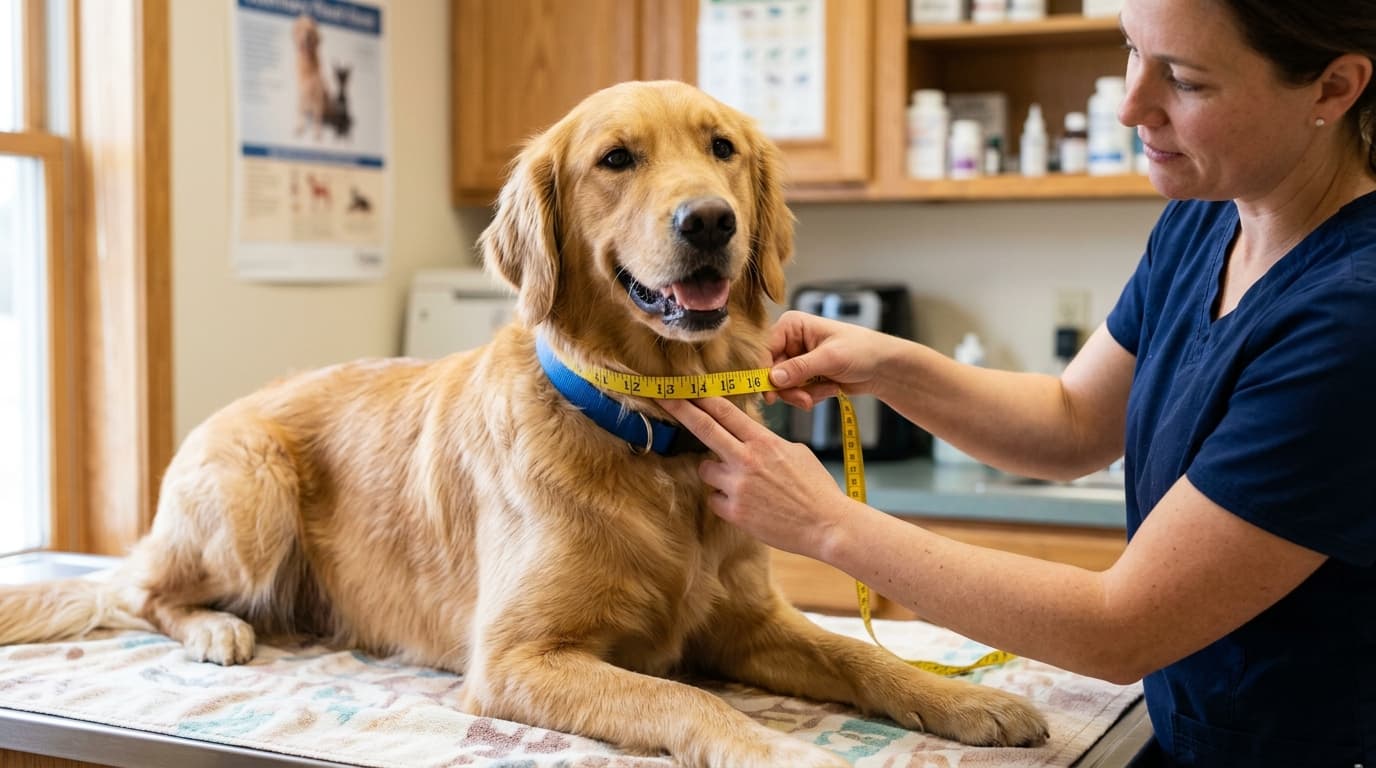
To measure your dog for a collar, run a soft tape measure right around the base of their neck – where the collar will actually sit, low down near the shoulders – and keep two fingers flat under the tape as you go. Whatever number you read off is your collar size. It takes about thirty seconds.
That's the whole answer. The rest of this is the detail that stops people getting it wrong, because we've remade enough collars to know where it goes astray.
Where the tape goes
The most common mistake is measuring too high. If you put the tape just behind the ears you'll get a smaller number than you want, because the neck narrows as it approaches the head. A collar sitting there rides up under the jaw, which is neither comfortable nor safe.
Instead, find the base of the neck – the widest part, just above where the neck meets the shoulders. Let the collar sit where gravity would naturally put it. That's the number we need.
The two-finger rule
Slide two fingers flat between the tape and your dog's coat, and measure with them in place. Not two fingers pushed in edgeways, and not a whole hand – two fingers, lying flat.
This is what gives a collar the room to be comfortable without being loose enough to pull over the head. When your collar arrives, check it the same way: two fingers should slide underneath without a struggle. If you can fit three or four, it's too loose.
If you haven't got a tape measure
Use a piece of string or a phone charger cable. Wrap it round, mark where it meets with your thumb or a pen, then lay it flat against a ruler. It's just as accurate, and most people find it easier than wrestling a tape around a wriggling dog.
Measure the dog, not the old collar
It's tempting to measure a collar you already own. Don't, unless you're certain it fits properly – you'll faithfully reproduce a collar that was always slightly wrong.
If you do want to use an existing collar as a cross-check, measure from the buckle pin to the hole you actually use, not the full length of the strap.
What if you're between sizes?
Size up. Every collar we make has a range of adjustment, so a size up will still come in to fit – but a size down won't go out.
That goes double for a puppy or a young dog who isn't finished growing. A collar bought at the top of one size in March can be uncomfortably snug by August.
Coat length changes things
A double-coated breed measured in winter will read bigger than the same dog after a spring moult. If your dog carries a lot of coat, measure with your fingers pressing gently down to the skin as well, and tell us both numbers – we'd rather make it right than have you send it back.
Puppies
Puppies grow fast and unpredictably, and a collar that fits perfectly today may not in six weeks. Two honest suggestions:
- Buy for now, in a size with room to let out, and check the fit weekly.
- Or wait until around ten months for a larger breed, when growth has mostly settled, and use something inexpensive in the meantime.
We would genuinely rather you bought one collar that fits for years than three that each fit for a season.
Still not sure?
The fit finder takes your measurement and tells you the size, with a note when you're near a boundary. There's a breed guide there too – though it's only ever a starting point. Dogs within a breed vary enormously, and the tape always wins.
And if you're stuck, send us the number and we'll tell you what we'd make.